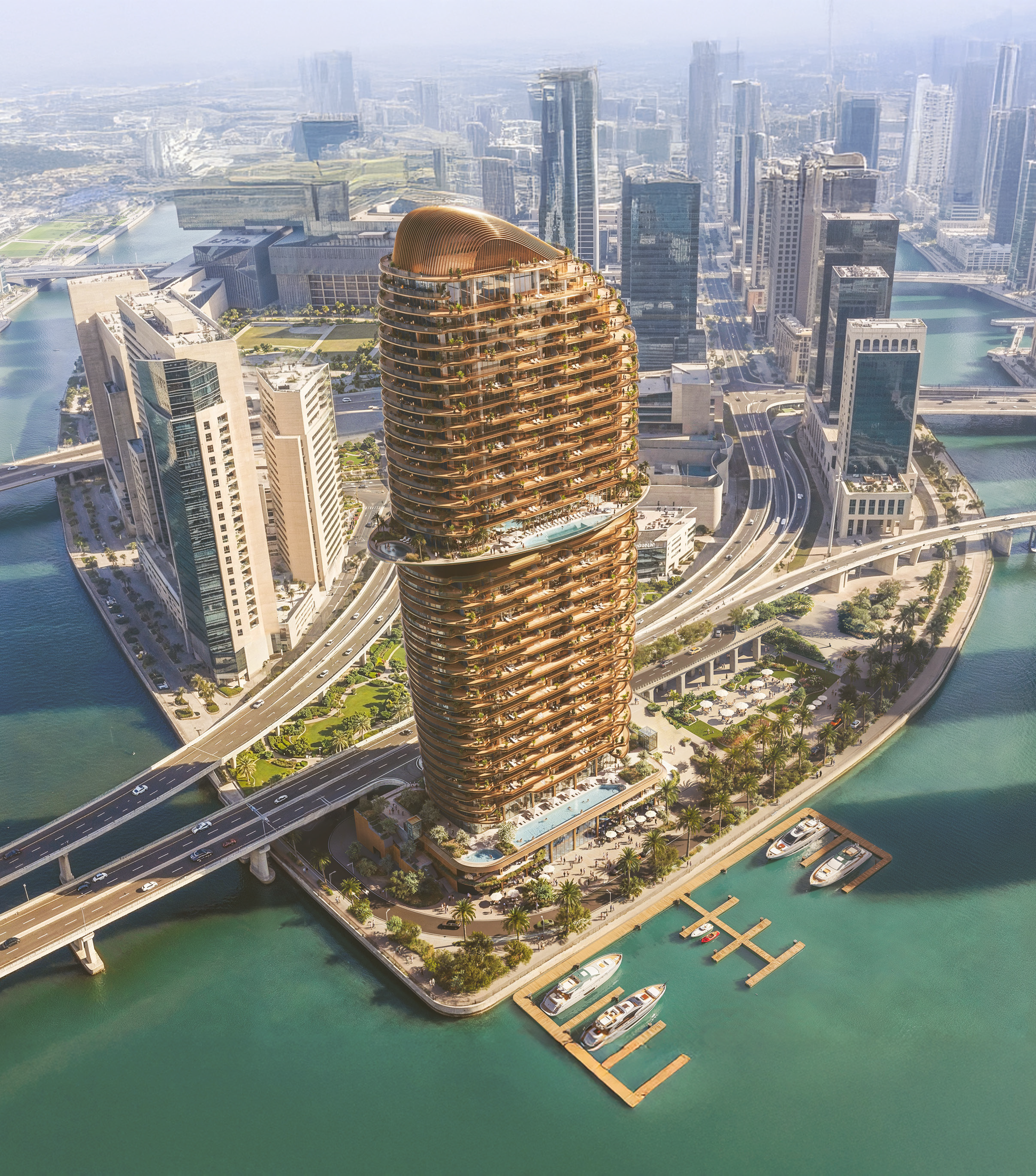
Al Maryah Island — The Property Investment Case
Why Abu Dhabi's financial free zone delivers the strongest risk-adjusted returns in UAE luxury real estate.
Al Maryah Island's investment proposition is built on a structural advantage that cannot be replicated by any other Abu Dhabi location: a physically constrained supply of residential units, combined with a permanently growing, institutionally-backed demand pool from Abu Dhabi Global Market's 1,300+ licensed financial institutions. This supply-demand imbalance has delivered consistent yield and appreciation outperformance relative to the Abu Dhabi market, and the gap is widening as ADGM's growth accelerates. This analysis covers the hard numbers behind Al Maryah Island's investment performance — yield data, appreciation trajectory, vacancy rates, transaction volumes, and forward projections based on ADGM's published 2030 expansion strategy.
The Supply Constraint Thesis
Al Maryah Island cannot expand. It is an artificial island with fixed boundaries — the water surrounding it, the bridges connecting it to the mainland, and the land use allocations (financial district, retail, hospitals, hotels) constrain the total amount of land available for residential development to a small fraction of the island. The number of residential units that can ever be built on Al Maryah Island is finite and known. This contrasts sharply with Al Reem Island, Saadiyat Island, or Yas Island, where new residential towers are regularly added to the pipeline, diluting yield and increasing vacancy pressure. Al Maryah Island's residential supply is essentially fixed while demand grows at 8–10% per year. The only available premium residential product for private buyers is Jumeirah Residences — making it the sole vehicle to capture this supply-constrained market dynamic.
The Demand Growth Thesis: ADGM Expansion
Abu Dhabi Global Market published a strategic plan targeting 2,500+ licensed entities by 2030, up from 1,300+ in 2025. This 90% increase in licensed institutions over 5 years represents a near-doubling of the ADGM corporate population that relies on Al Maryah Island accommodation. The growth is driven by Abu Dhabi's ambition to become the GCC's leading international financial centre, supported by: ADGM court system improvements, new digital asset and fintech licensing frameworks, sovereign wealth fund mandate expansions, and an active programme of attracting global hedge funds and family offices. Each new institution typically employs 5–50 senior professionals who require premium accommodation on or adjacent to the island. At even conservative projections, demand for Al Maryah Island premium residential units grows at 15–20% over the period while supply is essentially static.
Rental Yield Data: The Numbers
Based on current Al Maryah Island transaction data and corporate lease surveys: 1-bedroom branded units — gross yield 9–11%, net yield 8–8.5% after service charges (AED 25–35/sqft/year) and management fees (8% of gross rent for Jumeirah-managed rentals). 2-bedroom branded units — gross yield 8–10%, net yield 7–8% with comparable service charge structure. Non-branded 2-bedroom towers — gross yield 7–8%, net yield 6–7% after higher service charges (non-branded buildings typically charge AED 15–22/sqft/year but without the management quality that commands premium rents). The branded premium in yield is approximately 1–1.5 percentage points — significant over a 5–10 year holding period and reflecting the Jumeirah management standard that justifies premium tenant rents.
Capital Appreciation: 2022–2026 Track Record
Al Maryah Island premium residential pricing has appreciated as follows since 2022: Q4 2022 — AED 1,800–2,200/sqft for non-branded premium stock. Q2 2024 — AED 2,200–2,700/sqft (+20–25%). Q2 2026 — AED 2,500–3,200/sqft (+15–20% from 2024 base, +40% from 2022 base). Jumeirah Residences specifically (off-plan, Aldar-branded): launch pricing in 2024 set at AED 2,800–3,200/sqft; current secondary market pricing runs at AED 3,200–3,800/sqft — a 15–20% uplift while construction is still ongoing. This pre-handover appreciation is driven by secondary market demand from investors who missed the launch and the absence of any comparable product to substitute.
Risk Assessment: What Could Go Wrong?
Every investment carries risk, and intellectual honesty requires acknowledging them. For Al Maryah Island: Concentration risk — the market depends heavily on ADGM's institutional health. A global financial crisis could reduce ADGM's licensed entity count and reduce corporate housing demand. However, ADGM's common law infrastructure and sovereign backing make it more resilient than most financial centres globally. Construction risk — Aldar is the most financially robust developer in Abu Dhabi with sovereign backing, eliminating the developer failure risk that exists with smaller off-plan developers. Currency risk — AED is pegged to USD, eliminating exchange rate volatility for USD-base investors. For non-USD investors, the peg provides stability. Service charge escalation risk — Jumeirah-managed service charges reflect five-star operating costs. Any significant increase above the AED 35/sqft ceiling would compress net yields. Our base case models service charge increases of 3–5% per annum, consistent with Abu Dhabi CPI.
Frequently Asked Questions
Related Guides
AD Residences · Abu Dhabi
Ready to Take the Next Step?
Speak with a AD Residences advisor. Private briefings available by appointment.